
Welcome to Day 2
Ready to make your grammar feel natural and effortless?
In today’s session, we’re moving beyond the rules to see how advanced structures like the present perfect continuous, third conditional, and cleft sentences create fluid, confident English.
If you’ve already completed the Day 2 lesson, you’ve seen these patterns in action. If you haven’t had a chance yet, you can find the complete lesson, “Advanced Grammar,” in the Pipaltree English Lab. It’s designed to show you exactly how these structures work in real-world contexts.
B1 Task – Understanding the Grammar 💡
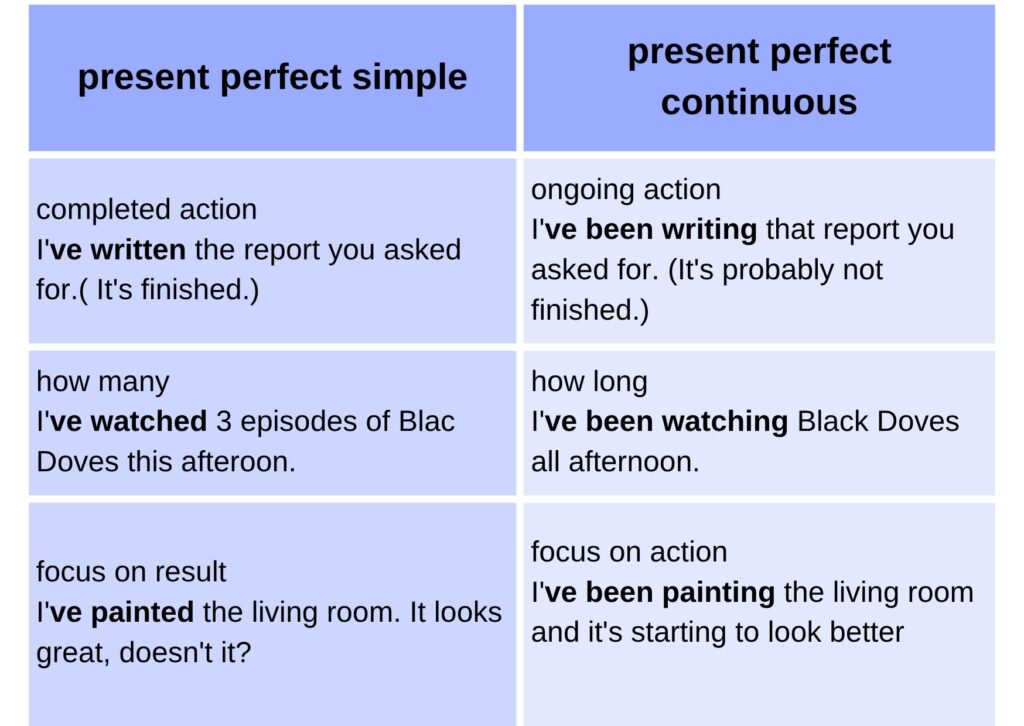
Before we jump into the exercises, let’s quickly review the key differences between the Present Perfect Simple and the Present Perfect Continuous.
Form 📝
Present Perfect Simple
have / has + past participleExample: I have worked…
Present Perfect Continuous
have / has + been + -ing verbExample: I have been working…
Use 🗣️
We use both tenses to talk about past states or actions that are connected to the present.
Sometimes, the meaning is very similar:
🟰 “I have worked here for 10 years.”
🟰 “I have been working here for 10 years.”
Sometimes, there is a key difference in meaning or focus:
🎯 We’ll explore these important differences next!
B2 Task – Understanding the Grammar 💡
Before we jump into the exercises, let’s quickly review two important advanced future structures.
Future Perfect Simple ✅
Form:
will have + past participle📝Use:
To talk about an action that will be completed before a specific time in the future. 🎯
Often used with time expressions like: by…, by the time…, in 2 weeks’ time. 🗓️
Examples:
“By this time next year, I will have finished my degree.” 🎓
“In five years, they will have saved enough money to buy a house.” 🏠
The focus is on the result of a completed action.
Future Perfect Continuous ⏳
Form:
will have been + -ing verb📝Use:
To emphasize the duration of an activity leading up to a specific future time. 🕒
It highlights how long the action has been ongoing.
Examples:
“This time next week, we’ll have been travelling for 4 months.” ✈️
“In January, I’ll have been living here for 20 years.” 🏡
The focus is on the ongoing duration, and the action may continue further.
Quick Comparison ⚖️
| Tense | Focus | Example |
|---|---|---|
| Future Perfect Simple ✅ | Completion & Result | “By 2025, he will have built the house.” |
| Future Perfect Continuous ⏳ | Duration & Process | “By 2025, he will have been building it for 2 years.” |
C1 Task – Mastering Nuance with Cleft Sentences 🎯
Ready to add sophistication and clarity to your English? Let’s revisit the powerful cleft structures you explored today.
Cleft sentences help you highlight the most important part of your message, making your speech more impactful and precise.
1. ‘What’-Cleft Sentences ✨
This structure is perfect for shifting the focus to the end of your sentence, building anticipation for your key point.
Structure:
what + clause + be + highlighted informationExamples in Action:
“What I love most about this city is the food.” 🍜
“What he’s really good at is fixing computers.” 💻
“What you should do is (to) go to bed earlier.” 💤 (The ‘to’ is usually optional)
2. ‘It’-Cleft Sentences 🔍
Use this structure to put a spotlight on a specific detail right at the beginning—ideal for correcting, contrasting, or emphasizing.
Structure:
It + be + highlighted information + that + clauseExamples in Action:
“It was in September that we moved house.” 🏠 (Not August)
“It is the people that we love.” ❤️ (Not the landscapes)
This is just the beginning! Cleft sentences are a powerful tool for advanced fluency, and we explore them in even greater depth in the Pipaltree English Language Lab.
